


We get to know your company inside and out so we can create videos that resonate with your audience.

We craft video content that informs, excites, and triggers your desired sales action.
.webp)
We help align your business goals with internal and external communications strategies.

The Difference Between Content Creation and Content Curation - And Why Green Bay Businesses Need Both

Which of these two marketing teams best describes yours?
- Team one expends a ton of creative energy, trying to produce something new every single week. A new video, a from-scratch blog, a fresh graphic… anything to fill the calendar!
- Team two takes the opposite approach, barely creating anything original at all. The team members just reshare, repost, and comment on whatever is trending in their industry that week.
Neither team is doing anything wrong, exactly. They're just doing half the job.
Content creation and content curation are two different tools, and they solve two different problems. Content creation makes something new, while content curation keeps you present. And you really need both to have a successful marketing strategy!
At Gillespie Productions, we spend a lot of time talking with Green Bay area businesses that are stuck in a rut with their marketing. So let's break down what content creation vs. content curation actually means, and why the businesses that get the most value from their marketing dollars are leaning into both.
What Is Content Creation?
Content creation is the act of producing a piece of original content from scratch, like a blog, a video, or a graphic carousel. But not all original content is created equal, and it’s important to have some strategy behind what you’re making.
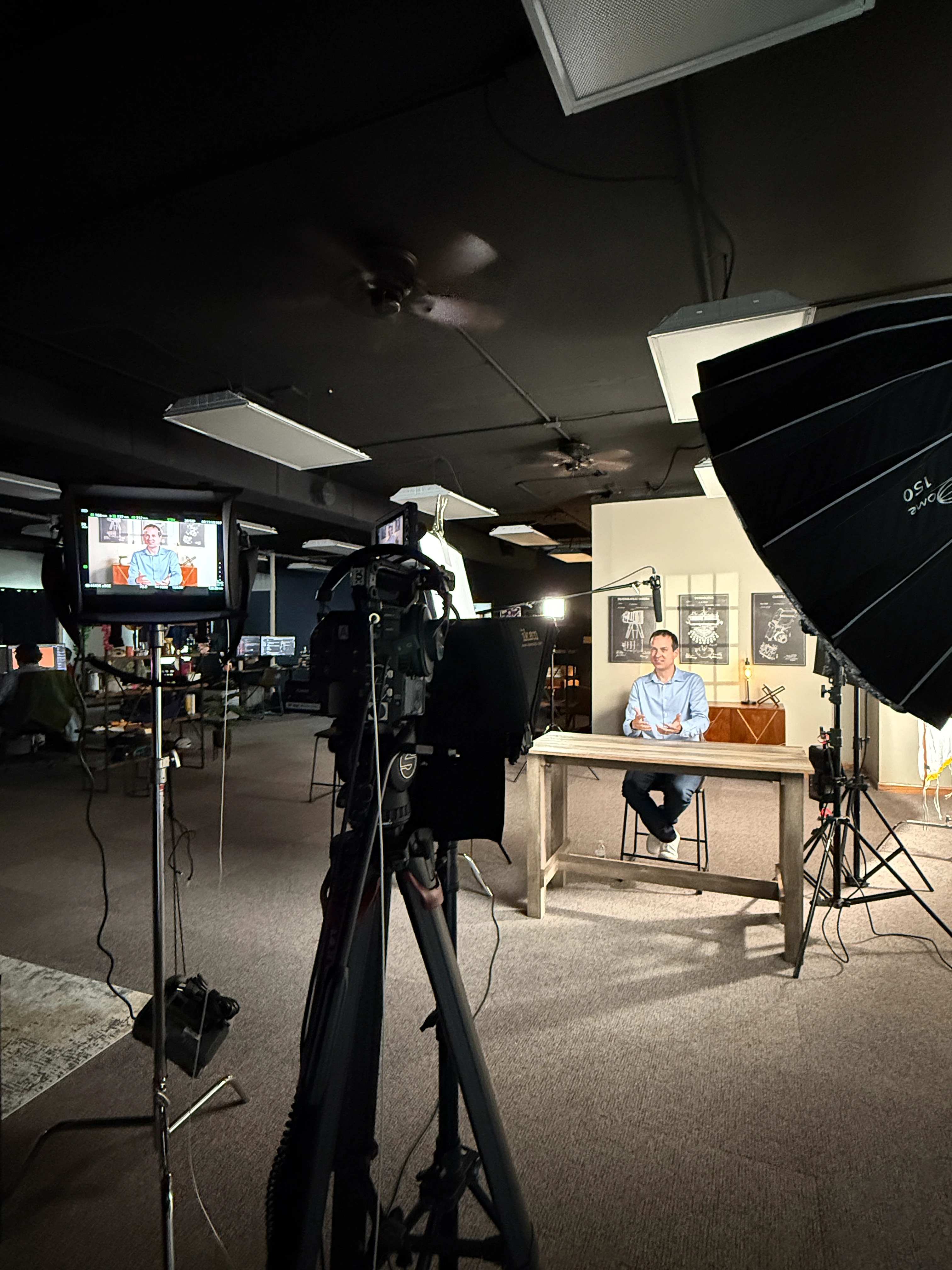
Our roots at Gillespie Productions are in journalism, and that shapes how we approach content creation for every client we work with. When helping a client build something new, we film real interviews with real employees and customers – not stock footage or templated scripts.
In other words, we want to gather authentic stories! That's what makes corporate video production feel authentic instead of generic, and it's the difference between a video people scroll past and one they actually finish watching.
What Is Content Curation?
Content curation means instead of creating something new, you're selecting, organizing, and resharing content that's already relevant. This could be a piece of content you made previously or industry news that’s relevant to your audience.
A solid content curation strategy takes what you already have and puts it in front of the right people at the right time, without demanding a brand-new shoot every time you need something to post. (We've written before about what a curated content plan actually includes!)
When done right, you aren’t just posting for the sake of staying active. A deliberate content curation strategy is built with intention, keeping the audience’s interests and pain points top-of-mind.
The Mistake Most Businesses Make
Here's where things tend to go sideways for a lot of organizations. Marketing and HR departments have limited time and even tighter budgets, and they find themselves with an imbalanced content approach.
Some try to create constantly, but the pace catches up with them fast. Even worse, the quality starts to slip because a full calendar has become more important than the message itself.
Others curate almost exclusively, resharing articles and jumping on trends without creating anything original. What they’re losing is their actual brand voice, because nothing original has been said in months.
Unfortunately, neither approach builds an effective content strategy for businesses.
Why Manufacturing, Education, and Professional-Services Brands Need Both
Think about a recruiting video or a brand story your organization recently created. That single piece of content deserves a whole layer of curation built around it.
- LinkedIn posts featuring quotes pulled straight from the video.
- Employee spotlights that echo the same themes.
- Plant-floor moments and day-to-day snapshots that reinforce the culture the video already showed off.
- Industry commentary that keeps your brand part of relevant conversations happening in your space.
This is why we build a permanent B-roll and asset library for our clients. Footage captured during one shoot can be curated and reused many times over, which cuts down on costs. You don’t need to schedule a new production every time you need fresh content.
For manufacturing, education, and professional-services organizations, whose employer branding and recruitment video content carries a lot of weight in a tight labor market, this makes a real difference in your content cost-of-ownership.
How to Build a Creation + Curation Mix
There's no single formula that works for every business and nonprofit. Research on content marketing effectiveness has found that results depend heavily on an organization's specific context. So the right mix for a manufacturing company will look different than the right mix for a school district or a professional-services firm.
That said, here's a starting framework that has worked well for a lot of our clients.
- Aim for one original piece of content each month. That could be a video, a blog post, or a case study. Then reshare and repurpose that single piece three to four times across different formats and platforms within that month.
- Build two to three content pillars tied directly to business goals. For example, “culture,” “product promotion,” and “recruiting” could be your three main foci. Now, every piece of content you put out – whether it's brand new or curated – should tie to one of these pillars.
- Set a realistic posting cadence (usually 3-4 times per week) that blends new material with curated resharing, so your calendar doesn't depend entirely on constant new production.
Signs You Need a Communications Strategy Partner
Has your organization outgrown the DIY approach? Here are a few signs:
- Posting happens inconsistently because nobody officially owns it.
- Your brand voice shifts depending on who's writing that week.
- Your content rarely ties back to a real business goal.
All of this means you’ve just outgrown your current capabilities! And now you're ready for a corporate communications strategy built with real intention, rather than one that's been pieced together in a hurry between everything else on your plate.
This is exactly where a partner who feels like an extension of your team – rather than a vendor checking boxes – makes all the difference. The right partner helps you see the gaps that are hard to spot when you're the one living inside the business every day.
How Gillespie Productions Helps Green Bay Businesses Build Smarter Content Strategies
We know that balancing content creation vs. content curation while running every other part of your department is a lot to carry. Most teams simply weren't built to do both!
That's exactly what our communications strategy services are designed to support. We help you build a creation and curation mix that fits your goals, your team, and your budget, so your content actually works for you instead of becoming one more thing to manage.
If you're ready to talk through what that could look like for your organization, let's talk. Reach out to schedule a no-commitment conversation.

Related Posts
Dive deeper into related blog posts and keep expanding your knowledge!
.webp)
.webp)
.webp)
LET'S PRODUCE ACTION.
Are you ready to bring your message to life? Let’s start the conversation about your goals and how Gillespie Productions can help you meet them.
